
Ayurveda is an interesting place where ancient wisdom meets modern understanding.
You’re not the only one who has ever wondered what the mysterious word “Vata” means.
This important energy isn’t just a thought; it’s a way to learn about our bodies, minds, and the world around us.
In this post, we’ll go into great detail about what Vata really means in English.
If you’re new to Ayurveda or just want to learn more, get ready for an enlightening journey that will leave you feeling inspired and informed!
Let’s figure out what Vata is all about together. This is where your journey to balance and harmony begins!
The History & Origins of Vata in Ayurveda
The idea of Vata in Ayurveda is thousands of years old, making it one of the oldest medical systems in the world.
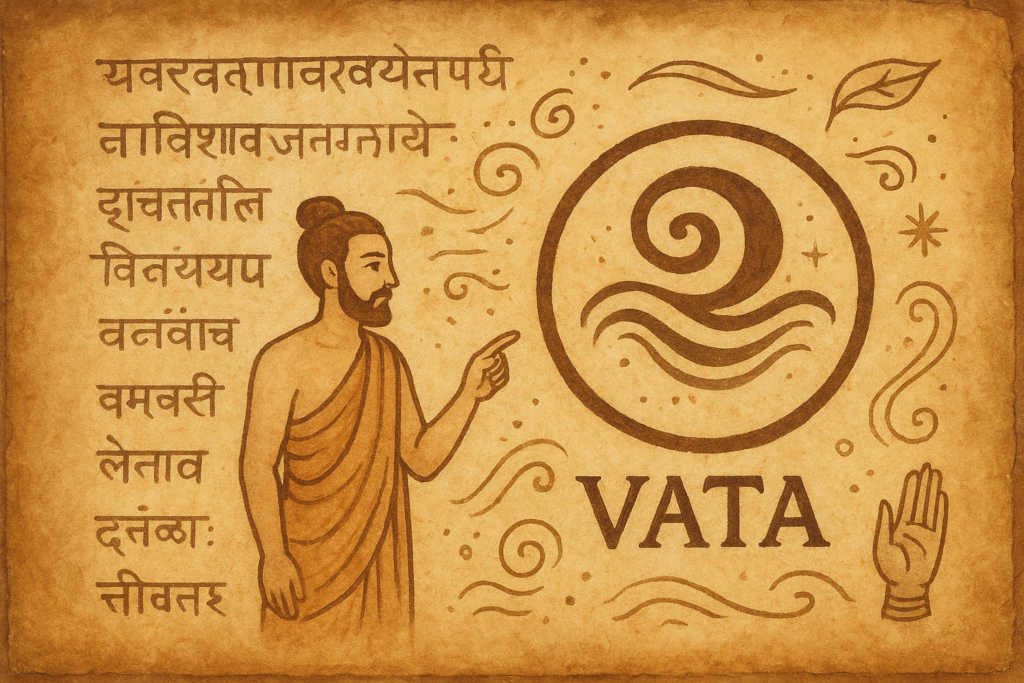
The word “Vata” comes from the Sanskrit word “Vayu,” which means “air” or “wind.”
Lightness, movement, and change are the main traits of this dosha, so this name fits it well.
According to Ayurvedic philosophy, there are five elements that make up the universe: space (ether), air, fire, water, and earth.
Vata, Pitta, and Kapha, which control our physical and mental makeup, are the three doshas that result from the combination of these elements.
Every person has a different mix of these doshas that make up their constitution or prakriti.
Ayurveda says that Vata is the most powerful and dynamic dosha because it controls all movement in the body.
Blood and lymphatic fluid circulation, nerve impulses, breathing, waste removal, and other processes are all controlled by it.
If our Vata didn’t work properly, we wouldn’t be able to move or do any of our bodily functions.
To fully understand how Vata fits into Ayurveda, it’s important to learn about the three doshas. You can explore more in this detailed guide on Understanding Tridosha in Ayurveda.
A Detailed Explanation of Vata Meaning in English
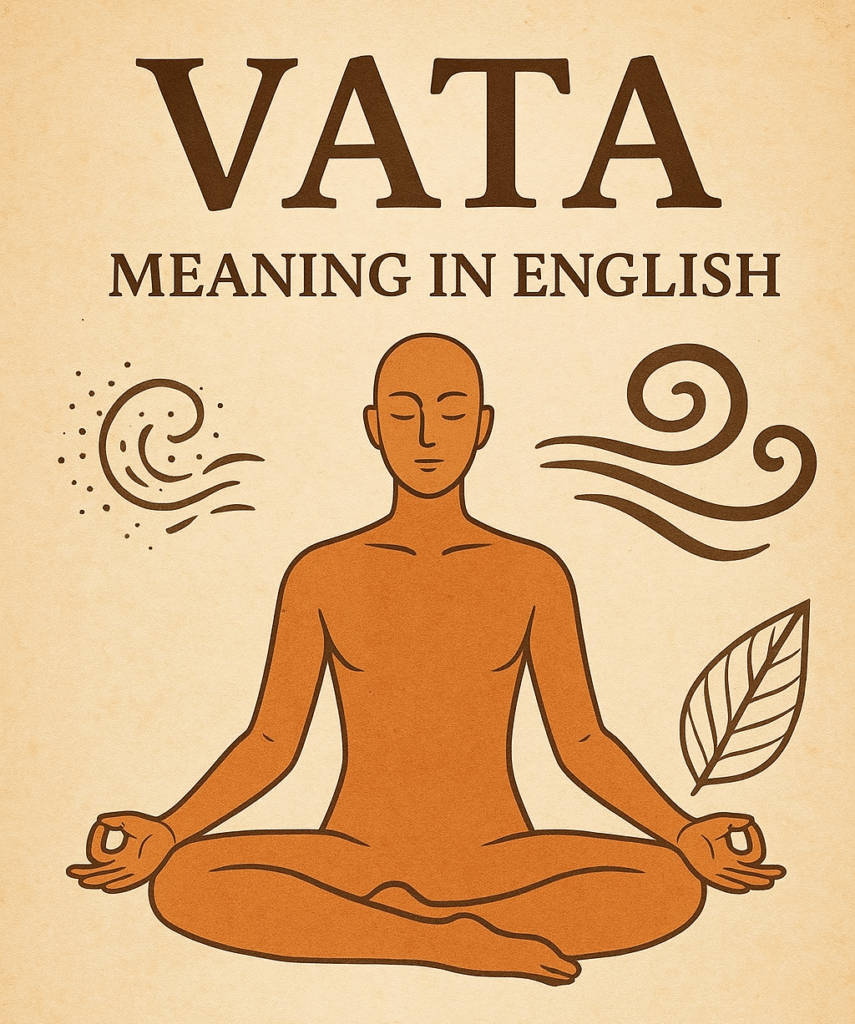
Vata is a Sanskrit word that is very important in Ayurveda, the ancient Indian system of medicine.
Vata’s meaning goes far beyond these straightforward translations into English, where it can be referred to as wind or air.
One must look into Vata’s deeper meanings and implications in order to fully comprehend its essence.
Vata is all about movement, change, and creativity at its core. It is linked to the air and space elements and controls all of our body’s and mind’s movements.
This includes both physical movements, like breathing, circulation, and digestion, and mental movements, like thoughts, feelings, and ideas.
Ayurveda says that everyone has a unique mix of three doshas: Vata (air), Pitta (fire), and Kapha (earth).
Our physical and mental characteristics are governed by these doshas, which are also important for keeping us healthy overall.
Vata is the strongest of the three doshas because it controls all of the body’s functions.
When Vata is in the right balance in a person’s body, it can bring about good things like creativity, enthusiasm, flexibility, vitality, quick thinking, and agility, which help us deal with changes in our environment.
Vata is an important concept in Ayurveda that stands for movement, change, and creativity.
It has a big effect on our mental and physical health, and we need to find a balance to be as healthy as possible.
We can appreciate the significance of Vata in Ayurvedic principles and incorporate practices to maintain a healthy balance of this dosha within ourselves by understanding the true meaning of Vata.
Vata Dosha: Its Characteristics and Qualities
Ayurveda’s three doshas include vata, which is often called the “king of doshas” because it is so strong and changes all the time.
It controls all of our body’s movement and communication, including breathing and digestion, as well as our thoughts and feelings.
People with a dominant vata dosha usually have a lean body type with long limbs and joints that stick out. They also tend to have dry skin and hair.
Their energy levels can change from being very active to being tired or restless.
The propensity for movement is one of the main characteristics of vata dosha. This shows up in both the body and the mind.
People with a dominant vata dosha may have digestive problems like constipation or bloating because their digestive fire (agni) is not stable.
Their naturally active minds may make it hard for them to focus or make their thoughts race.
The sensitivity of Vata, both physically and emotionally, is another key characteristic.
People with vata are very aware of their surroundings and notice small changes in them. If their environment is chaotic or too much for them, this can make them more likely to feel stressed and anxious.
Maintaining overall health and well-being requires an understanding of the characteristics and qualities of vata dosha.
We can consciously work to keep this dynamic dosha in balance for the best health by being aware of how it affects our physical and mental states.
If you want to go deeper into how to manage and balance this dynamic energy, check out our full resource on Mastering Vata Dosha for practical lifestyle tips.
What Vata Means in English and Its Global Significance

Let’s look more closely at Vata’s true meaning in English so that we can start to understand its importance around the world.
Vata is made up of the ever-moving and changing elements of air and space (ether).
In Ayurveda, it is believed that everything in the universe including humans, animals, plants, and even seasons are governed by these five elements – ether, air, fire, water, and earth.
Therefore, Vata is very important for maintaining balance in nature as well as our own health.
People from many different cultures and traditions around the world have the idea of Vata.
In Chinese medicine, it is called Qi (pronounced chi), which means “life force energy.”
In classical Greek medicine, it is referred to as pneuma or breath, which governs all bodily functions.
Carl Jung’s idea of extroversion in Western psychology is similar to Vata’s qualities of movement, dynamism, and creativity.
From a global point of view, Vata is an important part of being human: change.
People with vatas are known to have minds that change all the time, are always on the go, and need new experiences all the time.
This restlessness can make you feel anxious, scared, and overwhelmed. But this same trait also makes people adaptable, creative, and open to new ideas.
Vatas are valuable members of society because they can easily adapt to new situations. This is because they live in a world that is always changing.
Also, Vatas’ love of movement, whether it’s physical or mental, can be seen on a larger scale in the world.
The fast growth of technology, transportation, and communication can be seen as a sign of Vata’s qualities of speed and movement.
To sum up, the real meaning of Vata in English is more than just “wind” or “air.”
It shows how life is always changing and how we can adapt and thrive in the face of these changes.
Different cultures and traditions show how important it is around the world, which shows how important it is in today’s connected world.
We can learn to accept change, keep our balance, and live a peaceful life by understanding Vata in all its forms.
To sum up: Understanding the Meaning of Vata in English
Understanding and accepting the true meaning of vata in English can be very good for our physical, mental, and emotional health.
Vata, which has its origins in Ayurveda and includes many different qualities and characteristics, is a complicated idea.
First, vata is often linked to movement and change. This is because it is made up of air and space, which are always moving and changing.
We can learn to deal with changes in our lives more easily and find ways to stay active by embracing this part of vata.
Vata, in essence, teaches us how to balance movement and stillness, independence and connection, freedom and limits.
The true meaning of vata in English becomes clearer as a result of understanding these ideas;
it’s not just about one particular quality, but rather a delicate balance of many. Also, understanding the meaning of vata in English helps us understand and appreciate our own uniqueness.
Everyone has a different mix of doshas, and knowing which one is most important to us can help us make choices that are good for our physical and mental health.
When Vata is out of balance, it can lead to certain health concerns. Learn more about the symptoms and treatments in our dedicated post on Vaat Rog Meaning.
There are many benefits to living by the principles of vata. We can find balance, creativity, and flexibility within ourselves while also honoring our individuality by understanding and accepting its true meaning in English.
Let’s accept the beauty and complexity of vata and use it to make our lives more peaceful.